The First Season: What a Year Outdoors Actually Does to Patio Furniture
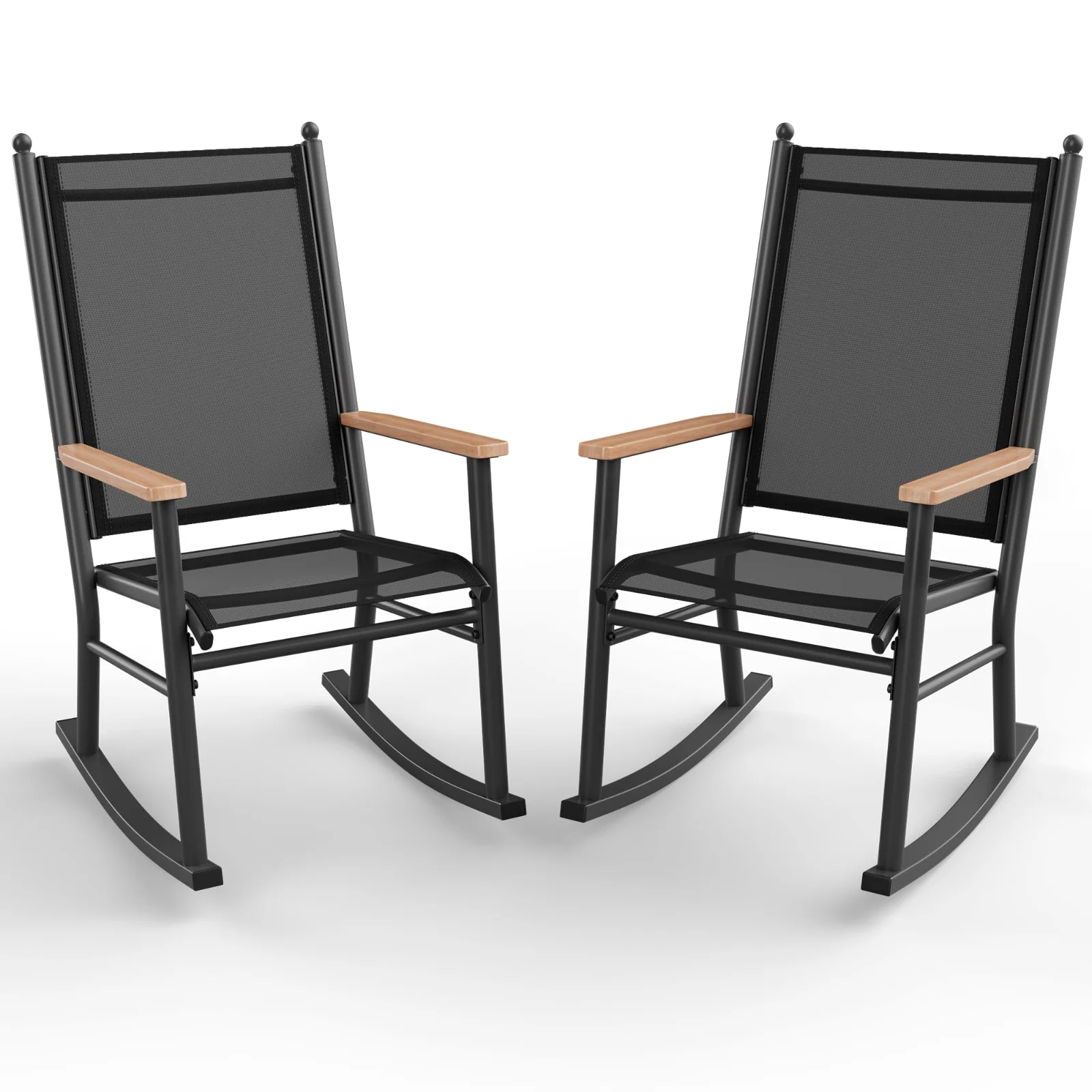
Outdoor furniture is bought in April and judged in September. That gap is the whole problem with choosing it from a photograph: the picture shows you a set on the day it was unwrapped, and what you actually want to know is what it looks like after a hundred and forty afternoons of sun, eleven storms, one hailstorm and a winter spent under a tarpaulin that blew off in January.
Nothing about that is mysterious. Four things happen to a piece left outside, they happen on different timetables, and they attack different parts of it. Sun works on colour and on polymer. Standing water works on joints and on foam. Wind works on anything with a surface area and not much weight. Freeze and thaw work on everything that is already slightly loose. If you know which of the four is going to be hardest on your particular yard, you can choose against it, and most of the disappointment goes away.
Sun: the one that has already started
Ultraviolet light is doing its work long before anything looks wrong, and that is what makes it the sneakiest of the four. It breaks the long molecules in a polymer into shorter ones. In a fabric that shows up as fading. In a moulded plastic it shows up as chalking, which is the powdery bloom you can wipe off a faded chair with a thumb, and then, eventually, as brittleness: a chair that was flexible becomes a chair that cracks at the leg when somebody leans back.
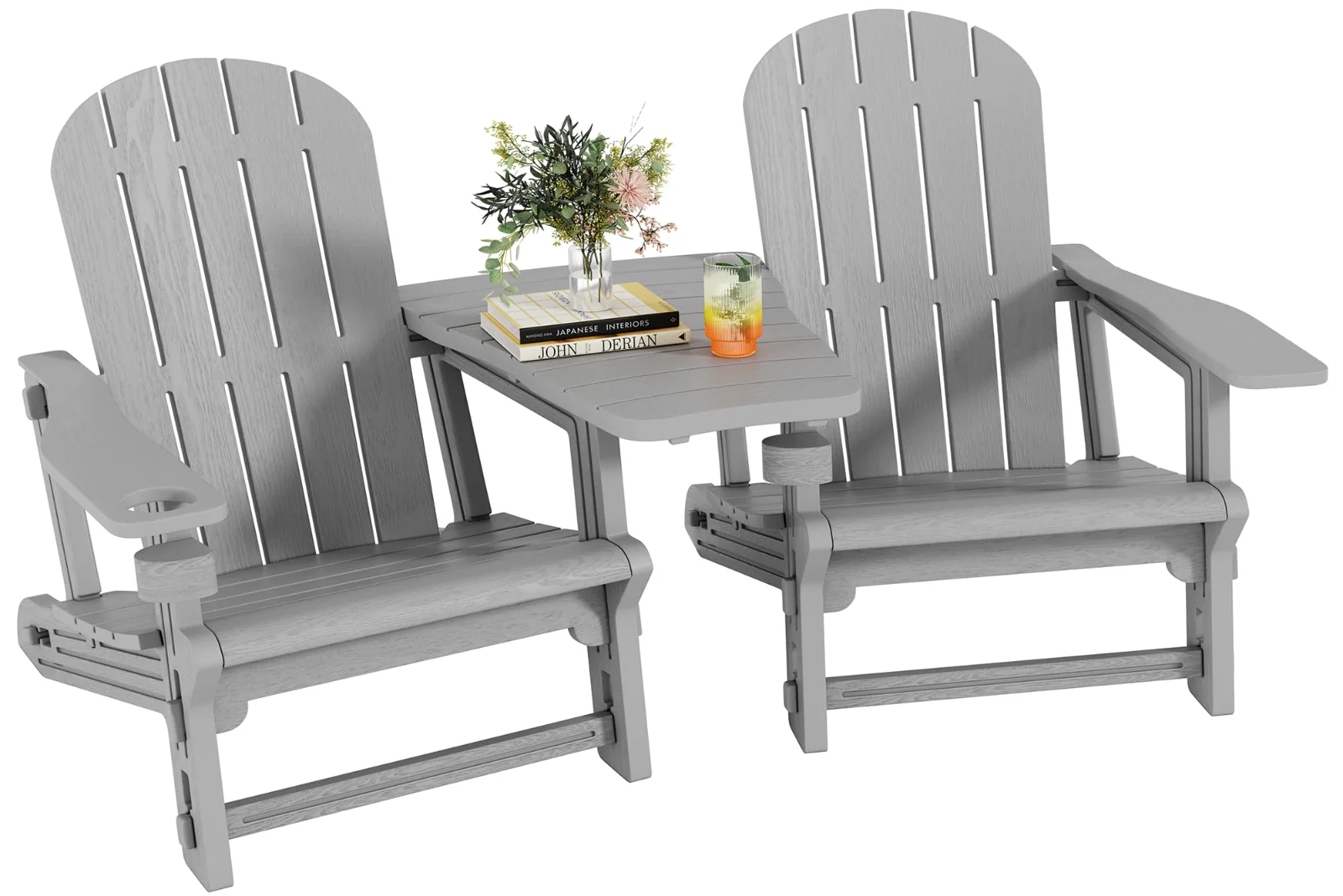
The defence is pigment and mass. HDPE lumber, the recycled high-density polyethylene the Adirondacks are moulded from, carries its colour all the way through the board rather than on the surface. This has one obvious consequence and one that only shows up in year three. The obvious one is that a scratch is the same colour as the board, so scuffs do not read as damage. The one that matters later is that fading happens evenly and slowly across the whole thickness instead of stripping a thin surface layer off a differently coloured core.
Textilene mesh, which is what the sling seats on the aluminium-framed sets are made of, is a polyester core with a PVC coating, and the coating is the part that takes the ultraviolet. It fades. A dark grey sling is a slightly lighter grey after three summers in a yard with no shade, and there is no honest way to sell you a fabric that will not do this. What it does do is drain in about a minute and stay clear of mildew, and for a chair that lives beside a pool that trade is usually the right one.
Cushions are where sun and water meet. The fabric fades, and the foam underneath is the part that actually decides how long the cushion lasts. This is why every cushion cover in the range unzips: not so you can wash it, though you can, but so the foam inside can be pulled out and dried after the one week in August when it rained for six days.
Water: standing, not falling
Rain landing on furniture is close to harmless. Rain that lands and then stays is what does the damage, and the difference between those two situations is almost entirely a matter of drainage design.
Look at a table top. A slatted top drains in the time it takes for the shower to stop. A solid top with a lip around it holds a shallow puddle for two days, and two days is long enough for the water to work into any fastener that penetrates the surface. This is not an argument that solid tops are bad; a tempered glass insert in a wicker table is solid and perfectly fine, because it is set into a frame that drains around it. It is an argument for looking at where the water goes.
On a steel frame the coating is the whole story. Powder coat is not paint: it is a dry polymer applied electrostatically and then baked, so it fuses to the metal rather than sitting on it as a film. The practical difference shows up at a scratch. Paint at a scratch lifts, water gets under the film, rust spreads sideways under the paint and the failure is much bigger than the original mark. Powder coat at a scratch tends to stay a scratch, and the rust that forms stays local. Neither is immortal, and a deep gouge down to bare steel on a chair leg that stands in a puddle will eventually rust either way.
Aluminium sidesteps the argument. It does not rust, because iron oxide is a thing that happens to iron. What it does instead is form its own thin oxide layer, which is what gives untreated aluminium that dull grey look, and which protects the metal underneath. An aluminium frame with a scratched coating is a cosmetic problem. A steel frame with a scratched coating is a maintenance problem. That difference is worth about ten minutes of your attention when you are choosing.
Wind: the one people underestimate
Wind is the only one of the four that can destroy a piece of furniture in an afternoon rather than over years, and it is the one nobody plans for.
The physics is not subtle. Force goes up with the square of wind speed and directly with the area you present to it. Doubling the wind quadruples the load. An open umbrella is a large area on a thin pole, which is a description of a sail, and an umbrella left open in a gust does not blow over gracefully: it inverts, the ribs go, and if it is a cantilever the whole assembly can walk across a patio.
The answers are all boring and all effective. Every umbrella here is sold against a base, and the base is not a decoration. A thirteen-foot cantilever needs serious ballast under the arm, because the load is not just weight but leverage. Close the umbrella when you go inside. Not when a storm is forecast, when you go inside, because the wind that damages an umbrella is very rarely the wind that was forecast.
Carports and canopies are the same problem at a larger scale, and they ship with ground anchors for exactly that reason. A twelve by twenty foot roof that is not anchored is not a shelter, it is a wing. Anchoring one is not optional and it is not difficult; the fittings are in the box.
Light chairs are the third case. A stacking aluminium chair weighs very little, which is the point of it, and that same lightness means it moves across a lawn in a strong gust. If your yard is exposed, that argues for HDPE lumber or for a wicker-over-steel set, both of which are heavy enough to stay put. How to fix a canopy or a base down properly is in the anchoring notes.
Freeze and thaw: the slow one
Water expands when it freezes. If it has got into a joint, a fastener hole or a crack in a coating, it expands there, and the joint is very slightly wider afterwards. Do that forty times over a winter and a frame that was tight in October is not tight in April.
This is why the single most useful habit with outdoor furniture takes four minutes a year: in spring, before anything is used, go round the set with the allen key that came with it and give every fitting a quarter turn. That is it. Most of what people describe as an outdoor set going wobbly in its second summer is simply fasteners that were never re-checked after their first winter.
Storage matters more than covers. A cover that traps moisture against a cushion is worse than no cover at all, which is a genuinely counter-intuitive result and the reason people are surprised by mildew on furniture that was "protected" all winter. If you can store cushions inside, do; if you cannot, store them somewhere that breathes. Frames are far more tolerant. An aluminium or HDPE frame can stand out all winter without complaint. A steel frame is happier under cover but will survive.
| Condition | What it works on | How fast | What answers it |
|---|---|---|---|
| Sun | Colour, polymer flexibility, fabric coating | Two to four seasons before it shows | Pigment through the board, shade at the hottest hour |
| Standing water | Joints, fasteners, cushion foam | One bad week can start it | Drainage design, unzipping covers, powder coat or aluminium |
| Wind | Umbrellas, canopies, light chairs | One afternoon | Bases, ground anchors, closing the umbrella |
| Freeze and thaw | Anything already slightly loose | One winter | A quarter turn on every fitting in spring |
The four material families, and what each one is actually for
Outdoor furniture is sold with a vocabulary that has gone soft from overuse. "All-weather" appears on everything. "Rust-resistant" is applied to metals that cannot rust and to metals that certainly can. It is worth being precise about the four families the outdoor half of this catalogue is built from, because the differences between them are real and they show up in year two rather than in the photograph.
PE wicker over powder-coated steel. The woven strand is polyethylene extruded to look like cane. It does not soak, it does not split, and it does not host anything. Under it is a steel frame, and that frame is what carries the load: the weave is a surface, not a structure. This is the family that gives you the deep-seat look, and it is the one that cares most about drainage, because a steel frame with water sitting in a joint is the one combination here that can rust.
HDPE lumber. Recycled high-density polyethylene, moulded into board profiles and assembled like timber. It is heavy, and that weight is a feature rather than a compromise: a heavy chair stays where you left it. It needs no sealing, no oiling and no staining, which is the whole argument against cedar for anyone who has ever sanded a cedar chair. It is the most expensive way to buy a chair here and the least demanding one to own.
Textilene on aluminium. A stretched polyester mesh with a PVC coating over an aluminium frame. It drains in about a minute, it does not hold heat the way a foam cushion does, and the frame cannot rust. It is the lightest of the four, which makes it the best answer for a balcony you have to carry furniture onto and the worst answer for an exposed yard where things blow around.
Steel with a baked finish, no weave. The bistro sets and the folding chairs. Simple, cheap, and entirely dependent on that finish staying intact; a chair in this family that lives on a slab which puddles will show rust at the foot before anything else goes wrong with it.
| Family | Sun | Standing water | Wind | Where it belongs |
|---|---|---|---|---|
| PE wicker over steel | Good: the strand is pigmented | Watch the frame, not the weave | Heavy enough to stay put | A slab that drains, deep seating |
| HDPE lumber | Best: colour through the board | Indifferent to it | Heaviest of the four | An exposed yard, no maintenance wanted |
| Textilene on aluminium | Fades slowly across the coating | Drains in a minute | Lightest: can move in a gust | A balcony, poolside, anywhere you carry chairs |
| Coated steel, no weave | Fine | The weak point: rust at a scratch | Middling | A covered porch, a small budget |
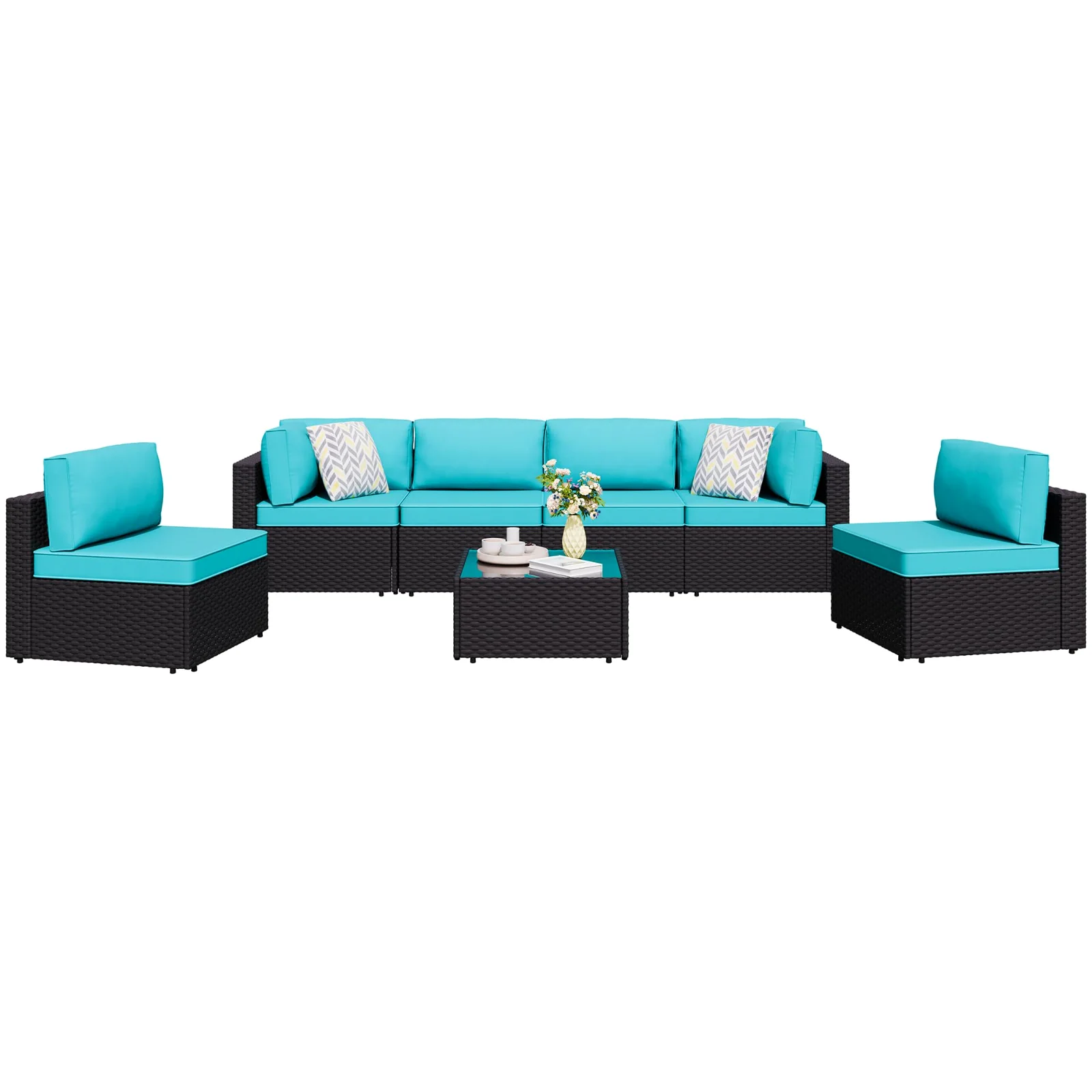
There is no best family here. There is a best family for a covered balcony in Seattle and a different one for an open slab in Phoenix, and the difference between them is not quality, it is which of the four conditions dominates where you live. The patio sets are mostly the first two families; the chairs cover all four.
How a set actually arrives
Almost everything outdoors here arrives flat, in more than one carton, and that fact is worth planning around because it surprises people.
A seven-piece sectional is not one box. It is usually four or five, they weigh enough that you will want them delivered to where they will be assembled rather than to a front step, and they do not all necessarily arrive on the same day. That is a consequence of how large freight moves rather than a mistake, and it is the single most common thing people are annoyed by on delivery day.
The build itself is short and follows the same order every time. Clear a flat surface, ideally the slab itself on a dry morning. Open everything and lay the parts out on the cardboard rather than on paving, which scratches powder coat. Count the fasteners against the sheet before you touch a frame, because a missing bolt found at step two is a phone call and a missing bolt found at step nine is a wasted afternoon. Assemble seat frames first and arms last. Leave every fastener finger-tight until the whole piece is standing, then go round and take them down properly; a frame tightened progressively as you go will end up slightly racked and will rock on a level slab.
Two people is genuinely easier than one for anything with a back higher than a chair, not because the parts are heavy but because holding a frame square while starting a bolt is a two-handed job and you only have two hands.
What this means when you are choosing
Take your yard seriously as a set of conditions rather than as a photograph. Three questions settle most of it.
- How much sun does the spot get between one and four in the afternoon? If the answer is all of it, that is an argument for shade before it is an argument for any particular chair, and it moves HDPE and textilene up the list against anything with a printed fabric.
- Does water stand anywhere on the surface after rain? If the slab holds a puddle, so will furniture feet, and that argues for aluminium legs over steel ones at the same price.
- Is the spot exposed? If you can feel wind funnel between the house and the fence, buy the heavier set and treat the umbrella base as part of the umbrella rather than as an accessory.
None of that is about brand and none of it is about price. It is about matching a material to a condition, which is a thing you can do in five minutes standing in your own yard, and which almost nobody does before ordering.
Shade is a piece of furniture, not an accessory
The most common mistake in furnishing a patio is buying the seating first and treating shade as something to add later if it turns out to be needed. In most yards it turns out to be needed, and by then the seating is already placed in a way that makes shading it awkward.
A centre-pole umbrella puts a pole through the middle of the table, which is fine if the table was designed for it and irritating if it was not, because the pole sits exactly where a serving dish wants to be. A cantilever umbrella hangs the canopy from an arm at the side, so the area underneath is completely clear. That is the entire difference, and it costs more, and for a dining set it is usually worth it. Both kinds are in shade and shelter, along with the carports.
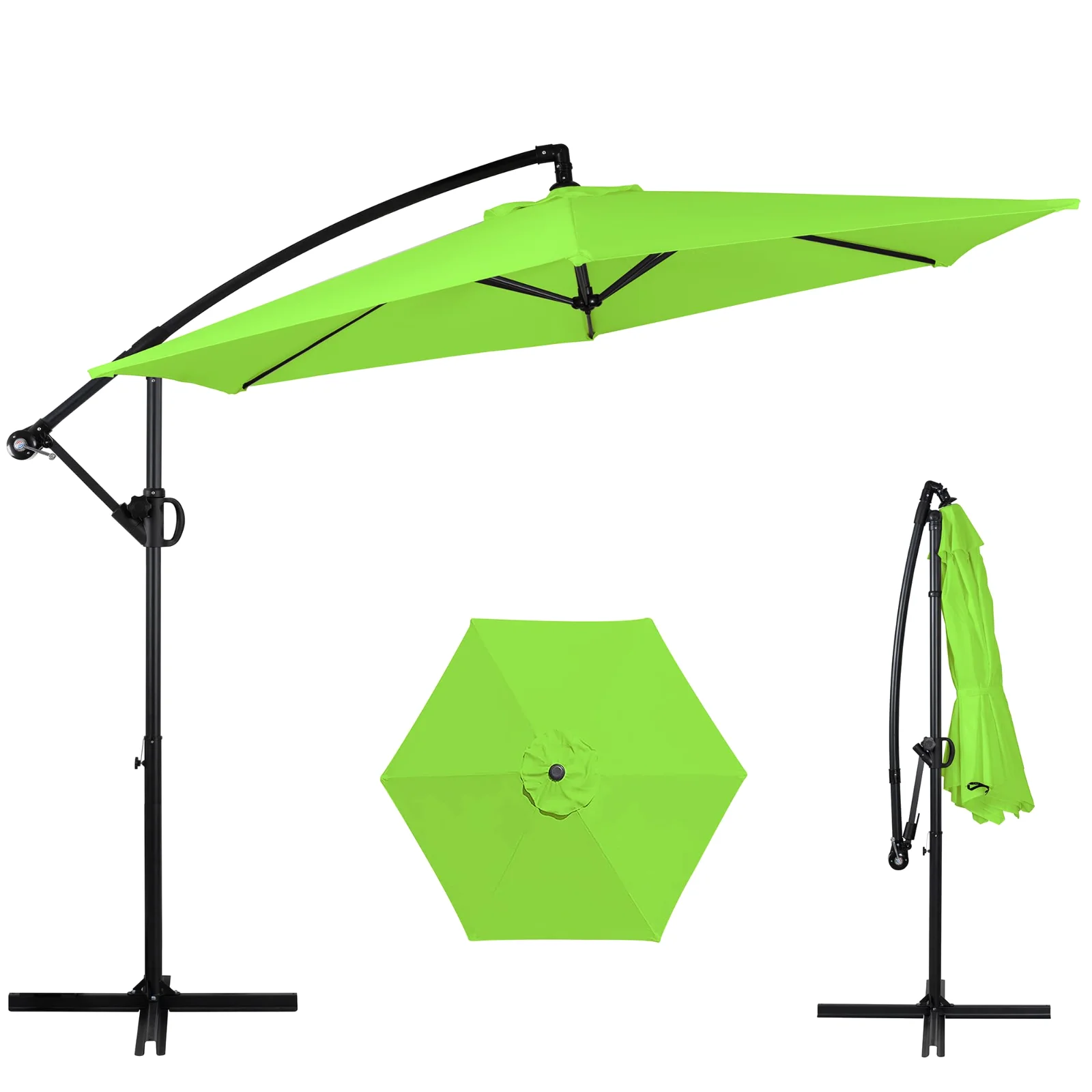
The number that matters is not the diameter, it is where the shadow falls at the hour you actually sit down. A thirteen-foot canopy directly overhead at noon covers a table for six comfortably. The same canopy at four in the afternoon, with the sun forty degrees lower, throws its shadow several feet sideways and may miss the table entirely. Cantilever arms usually tilt and many of them rotate on the base for exactly this reason. If yours does not, the practical answer is to place the base so that the shade is right at the hour you eat, and accept that it is wrong at other hours.
A carport is the same idea with the roof fixed. Twelve by twenty feet takes a car with room to open the doors, which is the dimension people forget: a car is six feet wide and a car with both doors open is closer to twelve. The same structure over a patio makes an outdoor room that is usable in rain, which changes how many months of the year the furniture underneath gets used.
The habits that actually matter
Four, and none of them takes long.
- Close the umbrella when you go inside. Not when weather is forecast. Every time.
- Unzip and dry the cushions after a wet week. The cover is not the point; the foam is.
- A quarter turn on every fitting each spring. Four minutes, and it prevents most second-season wobble.
- Rinse the salt or the pollen off once a season. A hose, not a pressure washer, which drives water into places that were fine.
Do those four things and a set that cost a few hundred dollars looks broadly the same in its third summer as it did in its first. Skip them and it will not, and the failure will get blamed on the furniture rather than on the winter.
None of the above is a secret and none of it is brand-specific. It is the ordinary physics of leaving furniture outdoors, which is exactly why it is worth writing down: the failures it produces get blamed on quality far more often than on weather, and the difference between those two is usually four minutes with an allen key in April.
The measuring side of all this is on how we keep this catalogue current, where the guidance behind the safety notes is listed with the date we read it. The other half of the job, fitting a piece to the space it has to live in, is in the measuring notes.
A propane fire pit is an outdoor appliance. Keep it at least ten feet from the house or anything that can burn, keep children in sight while it is lit, and put it out before you go inside: that is the federal fire agency wording, and the carton instructions are the authority on the rest. The source and the day we read it are on our updates page.